LDPE recycling facilities play a critical role in transforming plastic film waste into valuable recycled materials. This article explores the technical process, environmental benefits, and the machinery required for efficient LDPE
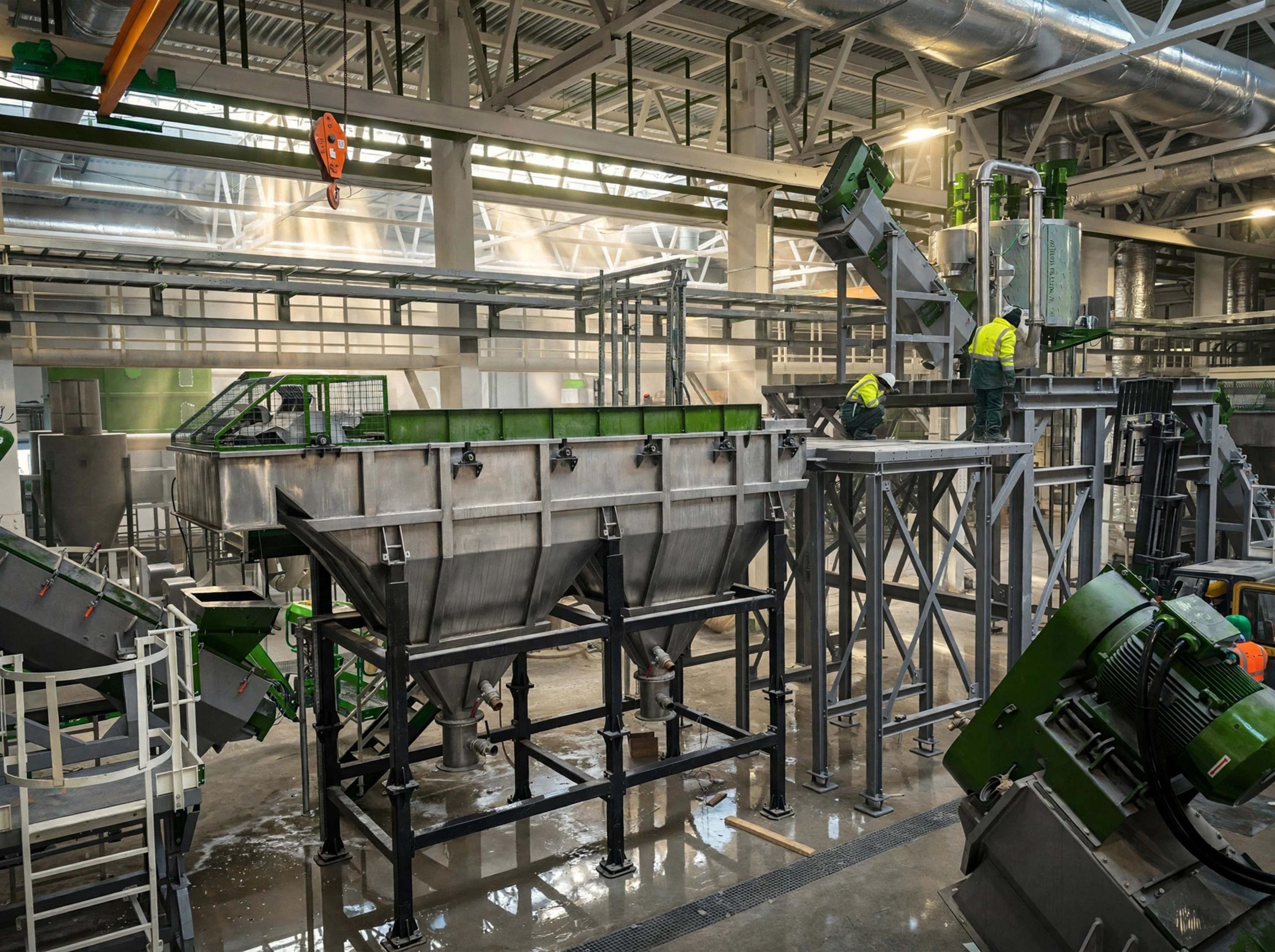
As global regulatory pressure on single-use plastics intensifies and raw material costs continue to rise, LDPE recycling facilities have moved from a niche environmental investment to a core pillar of competitive plastics manufacturing.
Modern recycling infrastructure allows manufacturers to transform post-consumer and post-industrial plastic film waste into high-quality recycled raw materials. In this context, purpose-built machinery and well-designed recycling lines play a critical role in determining operational efficiency, product quality, and economic viability.
This article explores the technical characteristics of LDPE, the environmental significance of recycling this material, and the industrial processes that enable large-scale LDPE recycling operations.
Low-Density Polyethylene (LDPE) is a thermoplastic polymer produced from ethylene monomers through high-pressure radical polymerisation.
One of LDPE's defining structural characteristics is its highly branched molecular chain. This structure results in lower crystallinity levels — typically between 45% and 55% — compared to High-Density Polyethylene (HDPE).
These molecular characteristics give LDPE its well-known processing advantages.
Key technical properties include:
These properties make LDPE particularly suitable for applications such as:
Because LDPE does not undergo irreversible chemical degradation during recycling when properly processed, high-quality rLDPE pellets can be produced whose performance closely approaches virgin material.
LDPE represents approximately 17–20% of global plastic production, with flexible film applications forming one of the largest waste streams in the plastics industry.
Despite its recyclability, LDPE has historically suffered from relatively low recycling rates due to contamination and collection challenges.
However, the environmental case for LDPE recycling is compelling.
Lifecycle analyses show that:
This represents a 70–80% reduction in carbon emissions.
Additionally, LDPE films are among the most persistent plastic wastes in natural environments, with degradation times exceeding 450 years under typical environmental conditions.
For regulators and multinational brands, this has made recycled plastics a strategic priority.
Major companies such as Unilever, Nestlé and Procter & Gamble have publicly committed to incorporating significant recycled content in plastic packaging by 2025–2030.
A modern LDPE recycling facility typically includes several integrated processing stages.
Each stage directly influences the quality of the final recycled material.
Plastic film waste is collected and compacted into high-density bales. Bale quality and contamination levels significantly affect processing efficiency.
Primary shredders break down the bales and reduce particle size, preparing the material for washing and separation.
Hot washing systems remove labels, adhesives and organic contamination. Float-sink separation tanks exploit density differences to remove heavier polymers and impurities.
Mechanical centrifugal dryers combined with thermal drying reduce moisture content to below 0.5%, which is critical for extrusion quality.
Degassing extruders remove volatile components from the film waste, while melt filtration systems remove fine contaminants.
Pelletising systems produce uniform rLDPE pellets suitable for downstream plastic processing.
İnan Tech designs and manufactures specialised machinery for plastic recycling and processing lines.
Our engineering solutions are specifically designed for the challenges associated with low-bulk-density LDPE film materials.
Our technology portfolio includes:
In addition to equipment supply, İnan Tech provides:
Our recycling systems are currently used by recycling operators and plastics processors across Europe, the Middle East and Asia.
LDPE recycling facilities represent one of the most technically viable and commercially attractive solutions for reducing plastic waste at industrial scale.
As regulatory frameworks tighten and global brands increase their demand for recycled materials, investment in efficient recycling infrastructure will continue to grow.
The success of these recycling operations ultimately depends on well-engineered machinery capable of handling the unique characteristics of LDPE film waste.
This is precisely the operational challenge that İnan Tech solutions are designed to address.
📩 For technical enquiries and project consultation:
info@inanplastics.com
www.inanplastics.com
