Velimeşe OSB, Ergene / Tekirdağ  ·  +90 (282) 674 50 22
Technical

What Is an Agglomerator? Densifying Film and Fiber Plastics

What is an agglomerator, how does it work, and why does it densify low-density plastics such as film, fiber and foam before extrusion? An overview of the agglomeration process.
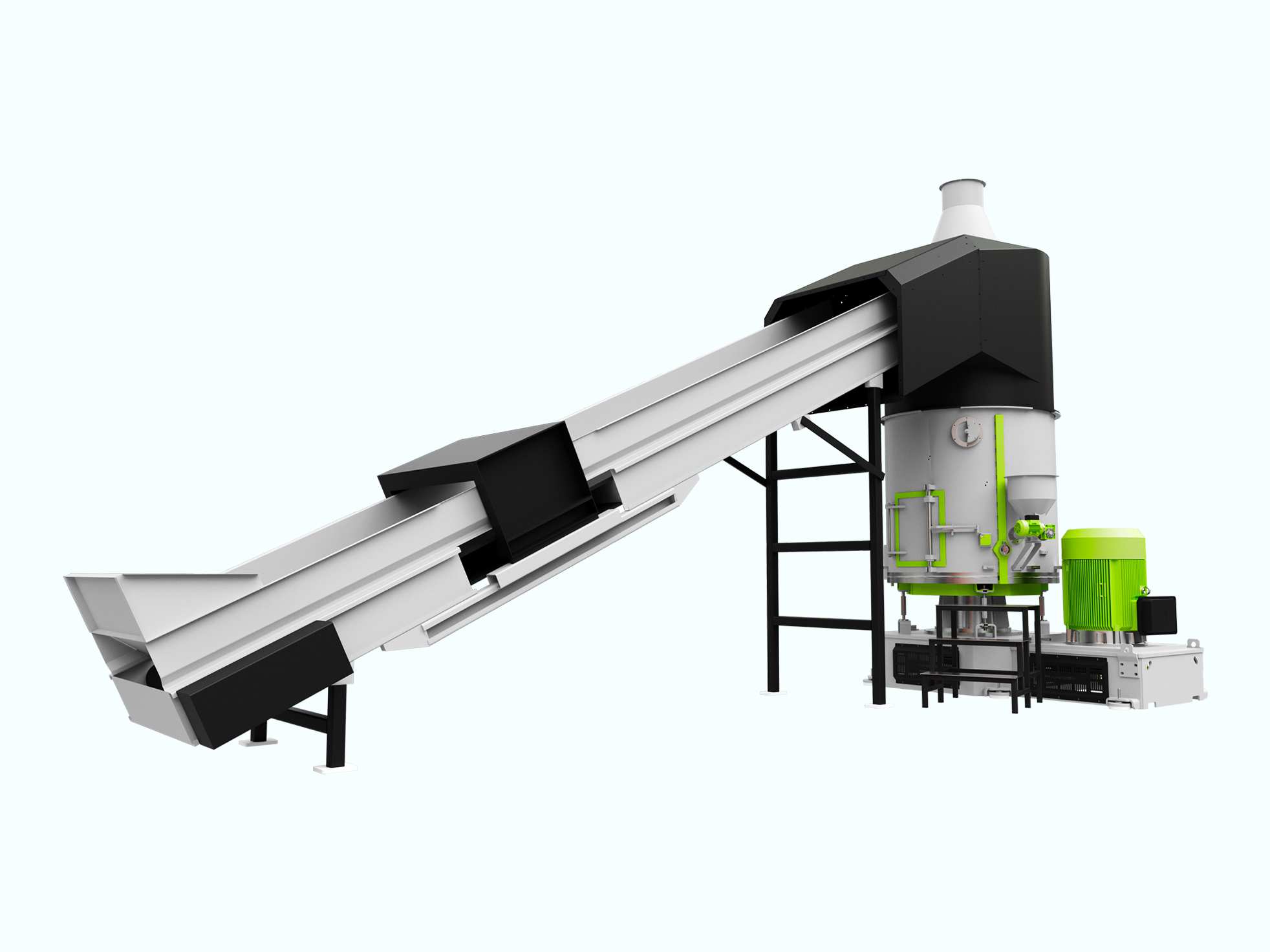
What Is an Agglomerator? Densifying Film and Fiber Plastics

Key takeaways

  • An agglomerator turns low-density plastics such as film, fiber and foam into dense particles using friction heat.
  • The goal is to reduce volume and raise bulk density for a more stable raw material before extrusion.
  • Agglomerate is an intermediate product; an extrusion stage is generally needed for the final granule.
  • It serves as a preparation step that improves feeding stability on film- and fiber-focused lines.

What is an agglomerator?

An agglomerator is a machine that softens low-density (lightweight, bulky) plastic waste — such as film, fiber, foam and thin sheet — with the help of friction heat and turns it into small, dense particles (agglomerate). The aim is to reduce the volume of the material and increase its bulk density, thereby producing a more stable, processable raw material for the next stage.

How does it work?

Inside the agglomerator, a rotating bladed rotor cuts and rapidly mixes the material. The friction heat generated by this motion brings the plastic close to its softening point without melting it; a controlled amount of water is often sprayed in to cause sudden cooling, and the material gathers into particles. The result is a free-flowing structure suitable for extrusion.

Which materials is it suitable for?

  • LDPE and HDPE film, along with production scrap from bag manufacturing
  • Woven and nonwoven fiber waste
  • Foam (lightweight foams, excluding EPS) and thin sheet trimmings
  • Low-bulk-density materials that are difficult to feed directly into an extruder

The difference between agglomerate and granule

Agglomerate is a friction-densified intermediate product that has not passed through the melting, filtration and pelletizing steps. A granule (pellet), on the other hand, is a more homogeneous final raw material produced by melting in an extruder and passing the melt through a melt filter. The agglomerator is generally positioned as a preparation stage that increases the efficiency of the granulation line.

Its role before extrusion

When bulky materials such as film are fed directly into an extruder, feeding irregularities and efficiency losses can occur. Agglomeration improves feeding stability by densifying the material and helps the line run more steadily. For this reason, it is frequently preferred on film/fiber-focused recycling lines.

Key benefits

  • Volume reduction and easier storage/transport
  • More stable and homogeneous feeding into the extruder
  • Improved processability of demanding materials such as film and fiber

Frequently asked questions

Does an agglomerator produce granules on its own? No; agglomerate is an intermediate product. An extrusion stage is generally required for the final granule.

Can every plastic be agglomerated? Agglomeration is particularly suitable for film, fiber and lightweight materials; for rigid and thick parts, a crusher/shredder is a more appropriate starting point.

Let us determine the right solution for your film and fiber line

Share your material; let us evaluate the agglomeration and extrusion stages together.

Get a Quote
Frequently Asked Questions

Common questions on this topic

What is an agglomerator and what is it used for?
An agglomerator softens low-density plastics such as film, fiber and foam with friction heat and turns them into small, dense particles. The aim is to reduce volume and raise bulk density for a more stable raw material before extrusion.
Does an agglomerator produce granules on its own?
No; agglomerate is a friction-densified intermediate product. An extrusion stage is generally required to obtain the final granule.
Which materials is agglomeration suitable for?
It suits low-density materials such as LDPE/HDPE film, bag production scrap, woven and nonwoven fiber waste and thin sheet. For rigid, thick parts a crusher/shredder is a more appropriate starting point.