
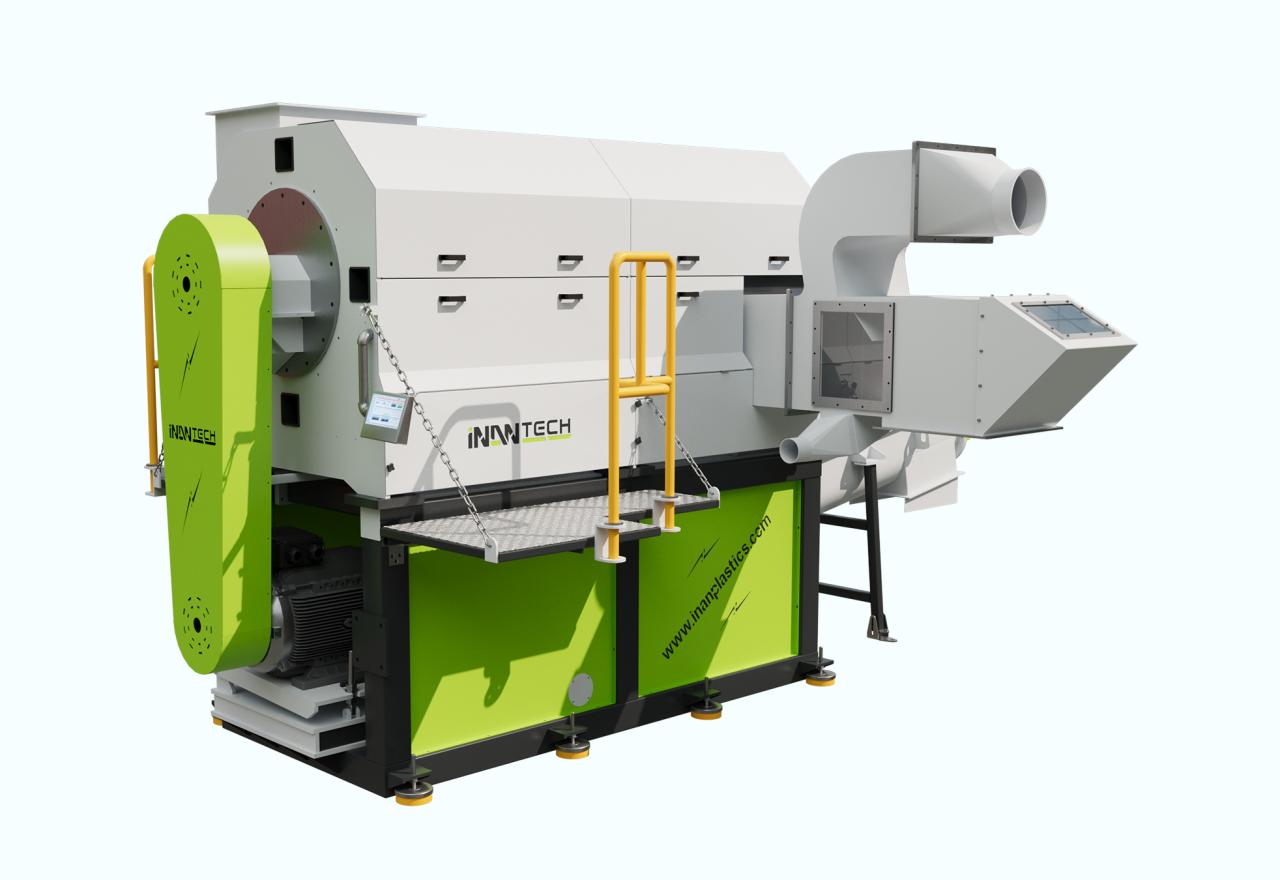
Label Remover (Delabeler)
Strips and separates labels and loose foreign matter from PET bottles and preforms by friction/impact.
Detail →Screening and separation units that sort material by type, size and density.
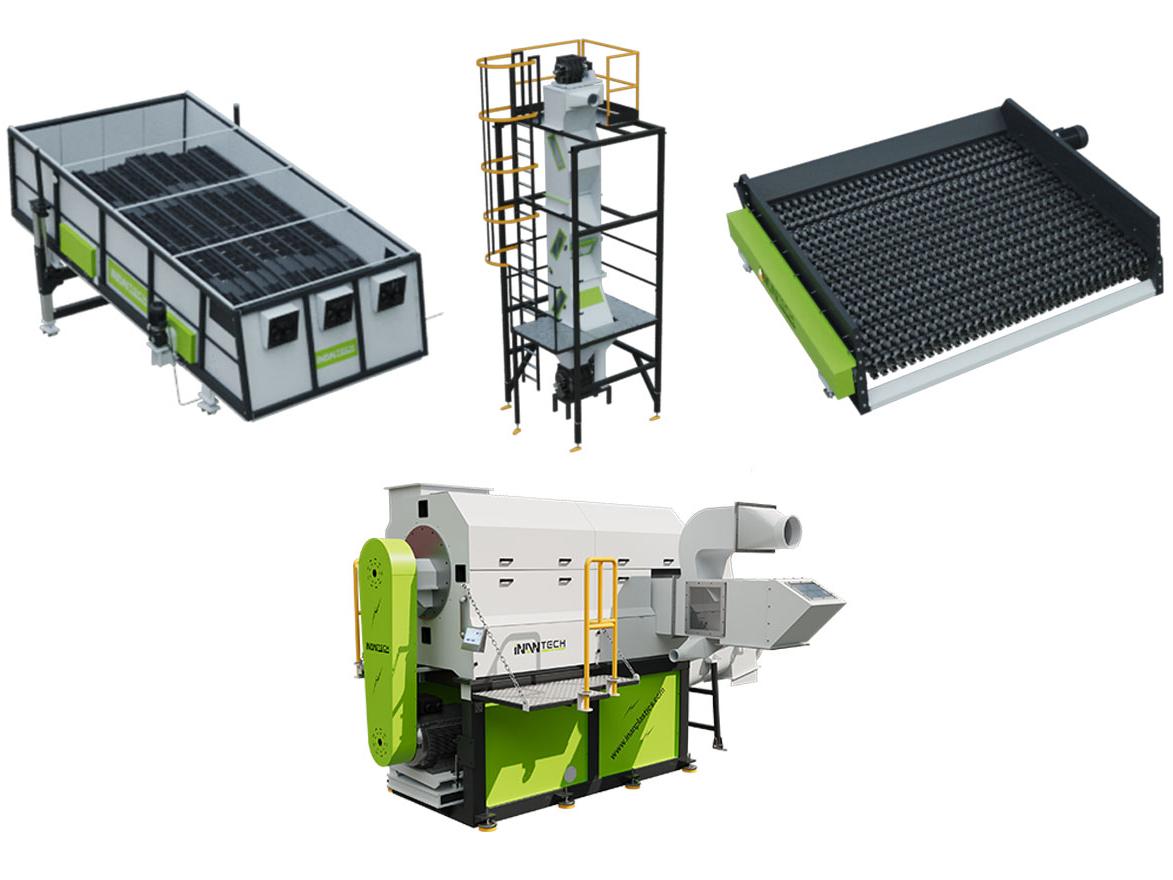
In a mixed plastic stream, separating parts of different material, size and density is essential for a pure, high-value output. İnan Tech’s separation-screening group covers a range of methods, from label and dust removal to size screening and air-based fraction separation.
Label removal takes labels and dust off bottles; the ballistic separator splits light and heavy fractions; the star screen sorts by size; and the zig-zag separates film and dust by air flow.
Separation and screening work on the principle that each machine relies on a different physical property. No single unit removes every contaminant, so the machines in this group complement one another. The label remover uses mechanical action to take dry labels and film off the body, sending a cleaner body on to later steps. The star screen and ballistic separator work by size and shape: rotating star discs split coarse pieces from fine grains, while ballistic paddles carry flat and rounded parts in different directions. For density- and weight-based sorting, the zig-zag air separator comes in; an upward air stream lifts light film and dust while heavier parts drop down. Taking each fraction out by a distinct property reduces foreign matter in the stream step by step.
This staged logic is the basis for raising the final purity:
The right separation unit depends on what you want to remove from the stream and the form in which the material reaches the machine. Several methods can also be combined on the same line, so the choice should not be limited to a single machine. The criteria below help determine which solution stands out:
Once you share your stream and target purity, you can proceed through our quote page for the right combination, or get in touch with us.
Strips and separates labels and loose foreign matter from PET bottles and preforms by friction/impact.
Detail →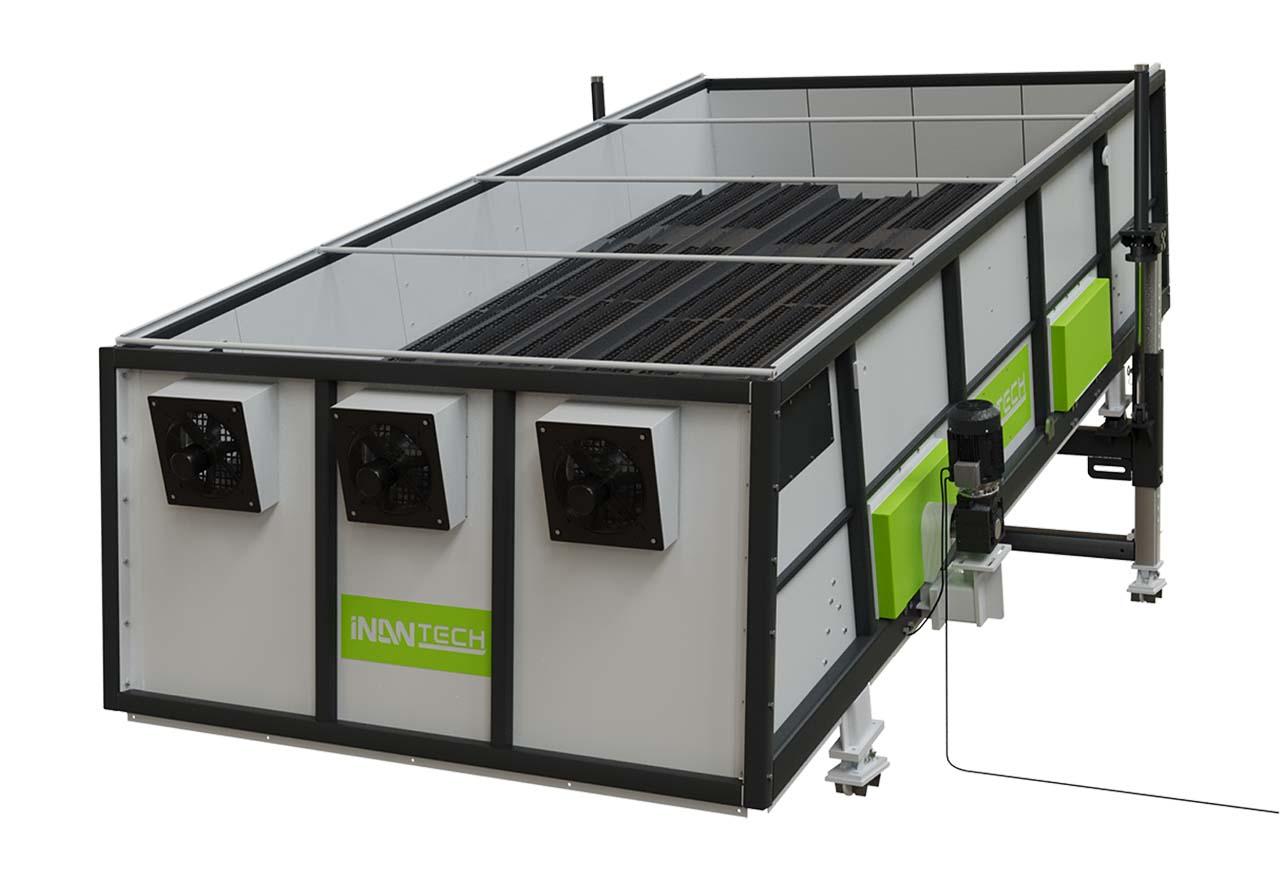
With inclined, oscillating paddles it separates material into heavy/rolling (3D) and light/flat (2D) fractions and also...
Detail →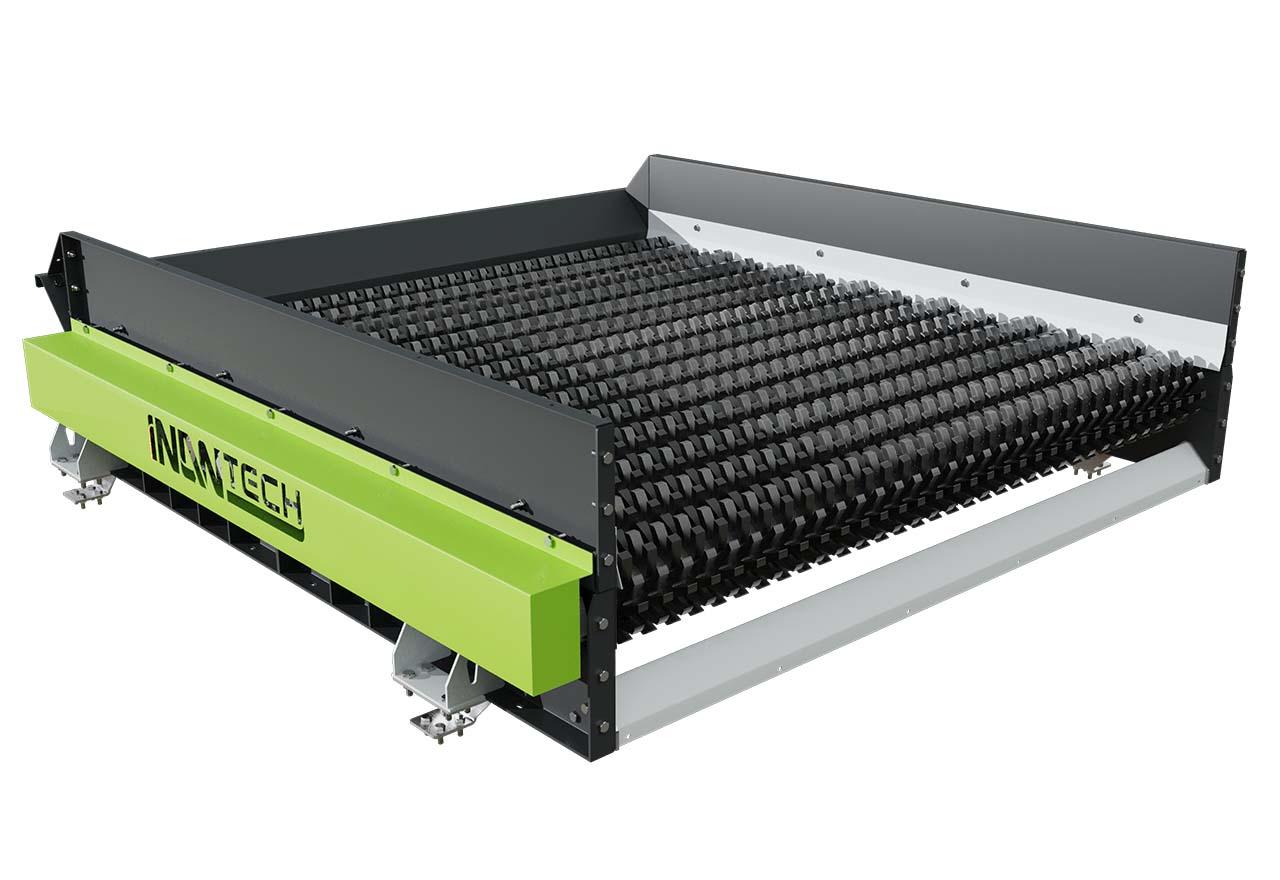
With rotating star-disc shafts it screens material by size; it provides screening that resists clogging and wrapping.
Detail →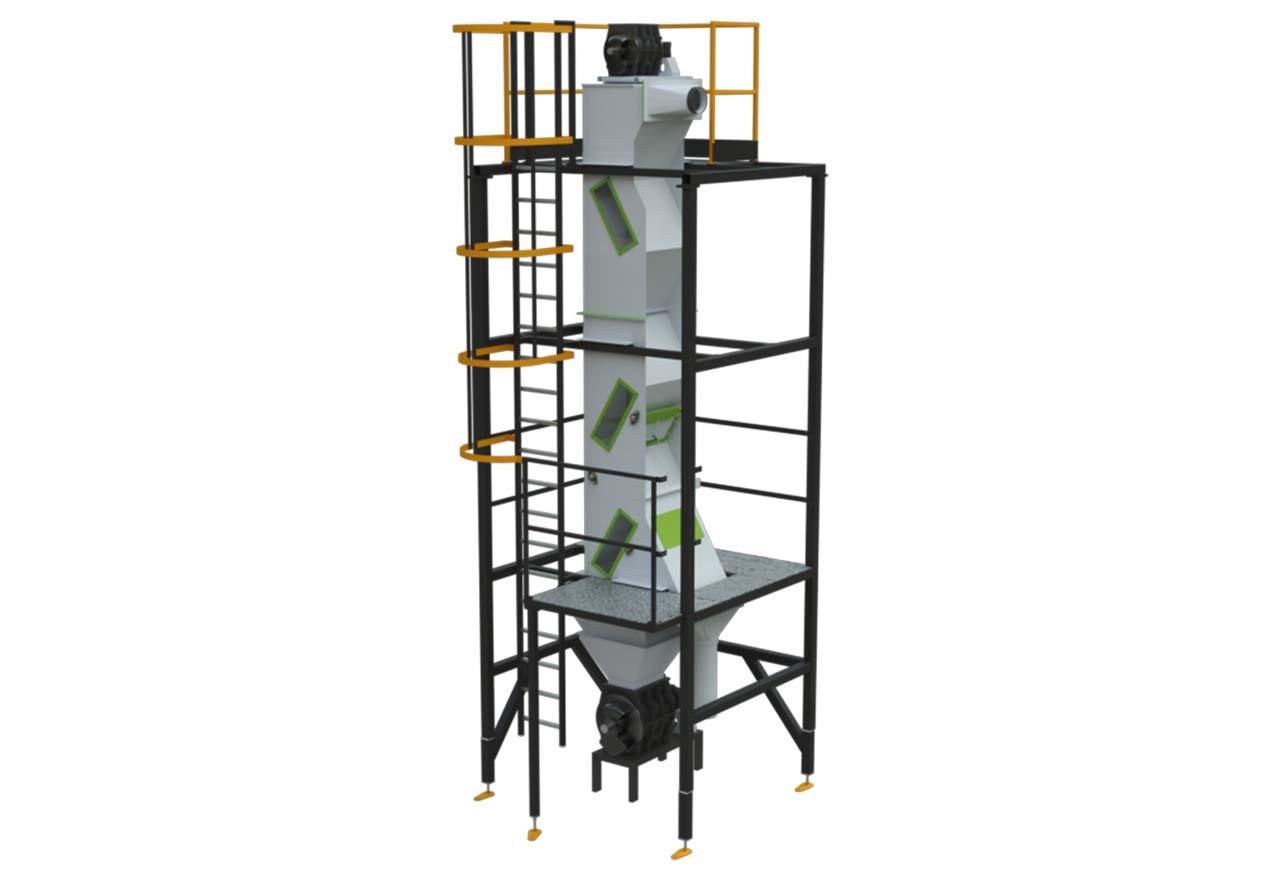
In a zig-zag channel, an upward air flow separates light (film, dust, label) and heavy (flake) material by density diffe...
Detail →Share your project; our engineering team will guide you to the right solution.