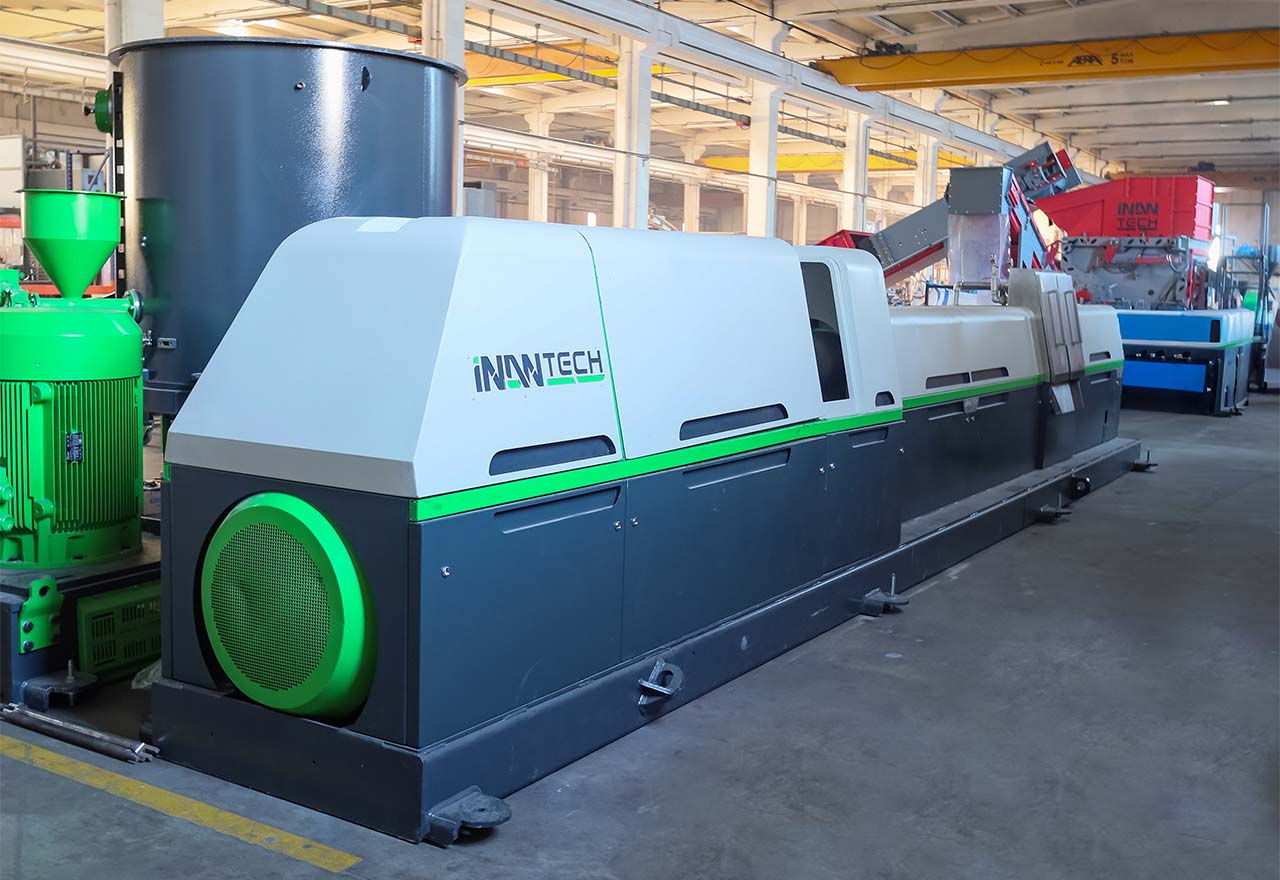
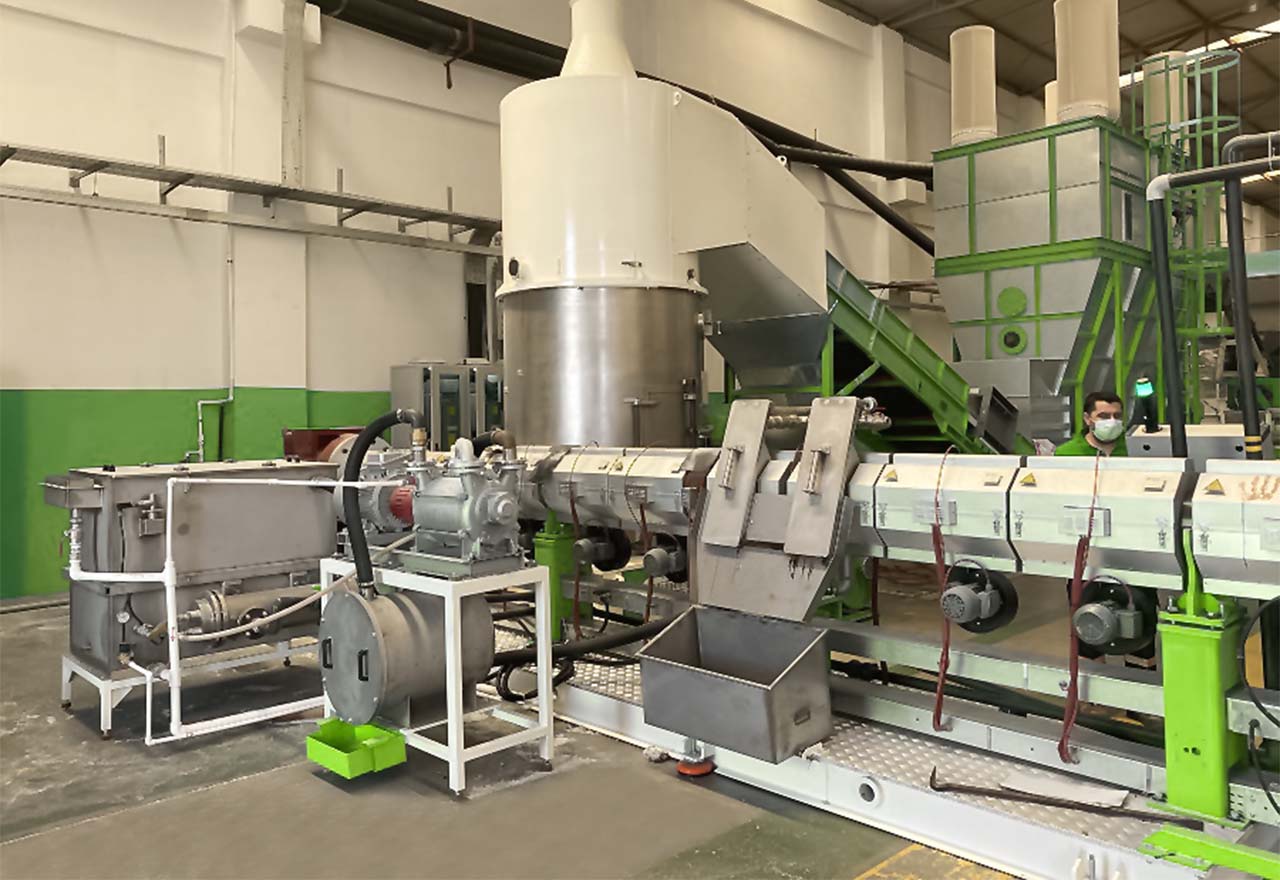
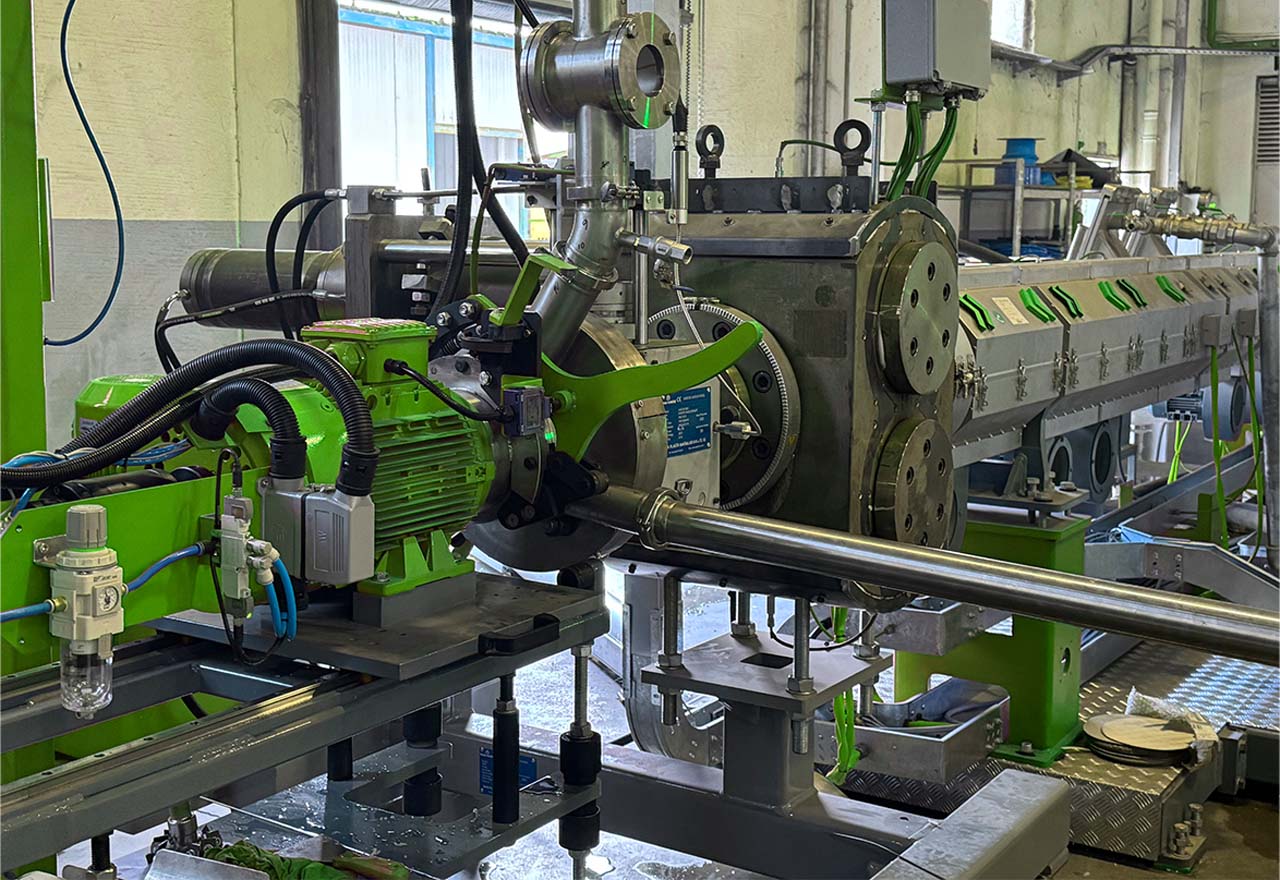
A single-screw extrusion unit that melts and homogenizes recycled plastic and, with its degassing zone, removes moisture and volatile substances.
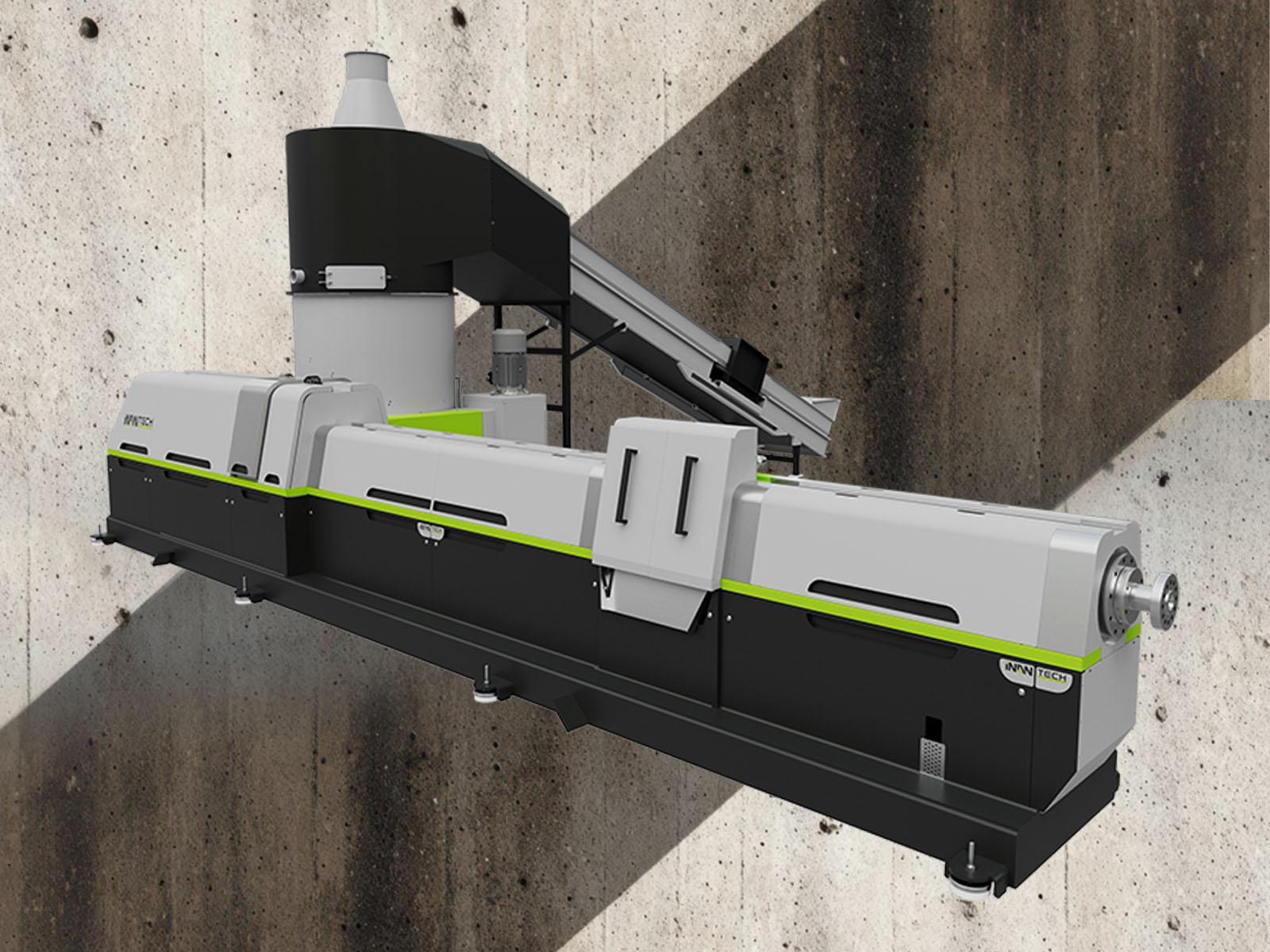
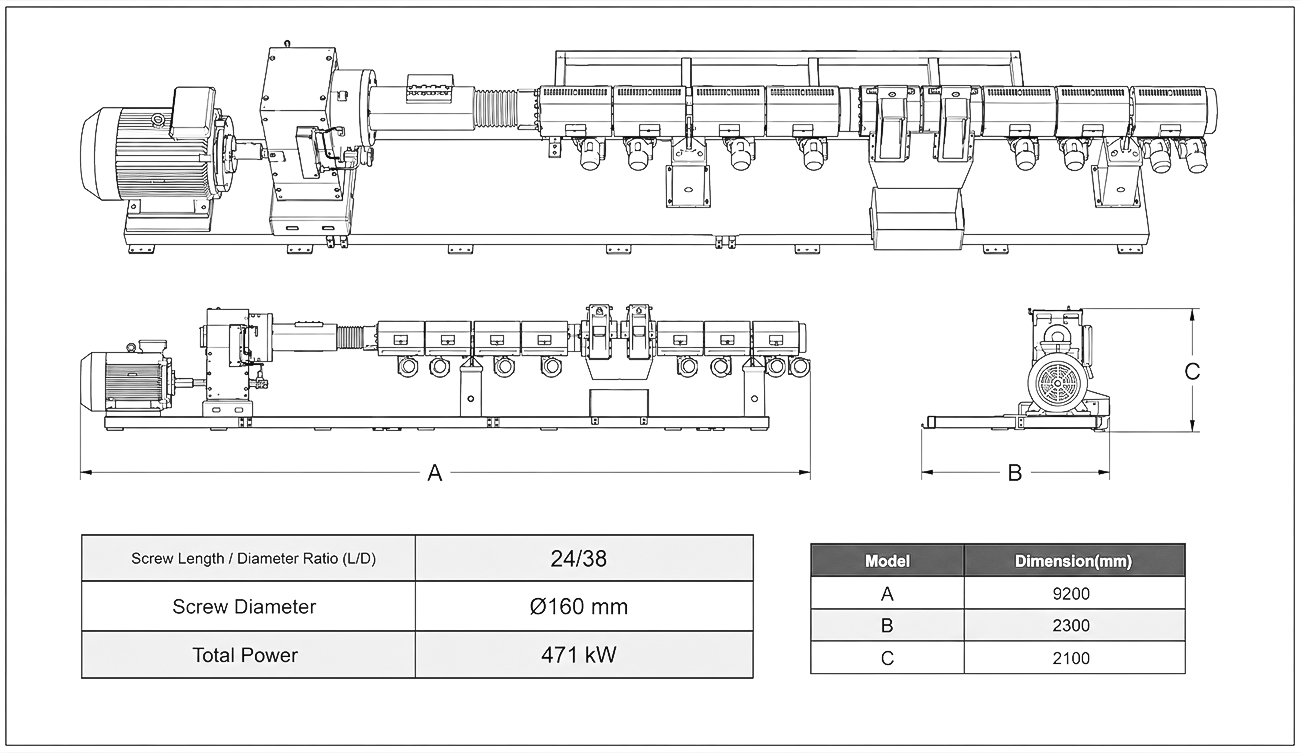
The extruder melts washed and dried flakes or agglomerate with heat and mechanical pressure, turning them into a homogeneous melt. This melt is directed to the melt filter and pelletizing stages, laying the groundwork for producing granules that can compete with virgin plastic. It is the heart of the granulation stage in recycling lines.
Moisture and volatile substances remaining in recycled material adversely affect granule quality and subsequent production. The degassing zone removes these gases and moisture from the melt by vacuum, with the aim of obtaining a more stable, bubble-free and consistent granule. Barrier screw geometry and controlled barrel heating keep the melt temperature and pressure balanced.
The extruder is positioned after the agglomerator or the crushing/washing stage, and at its outlet it integrates with the melt filter, melt diverter and underwater cutting units. It is used in the granule production of materials such as HDPE, LDPE, PE, PP and, under suitable conditions, PET.