
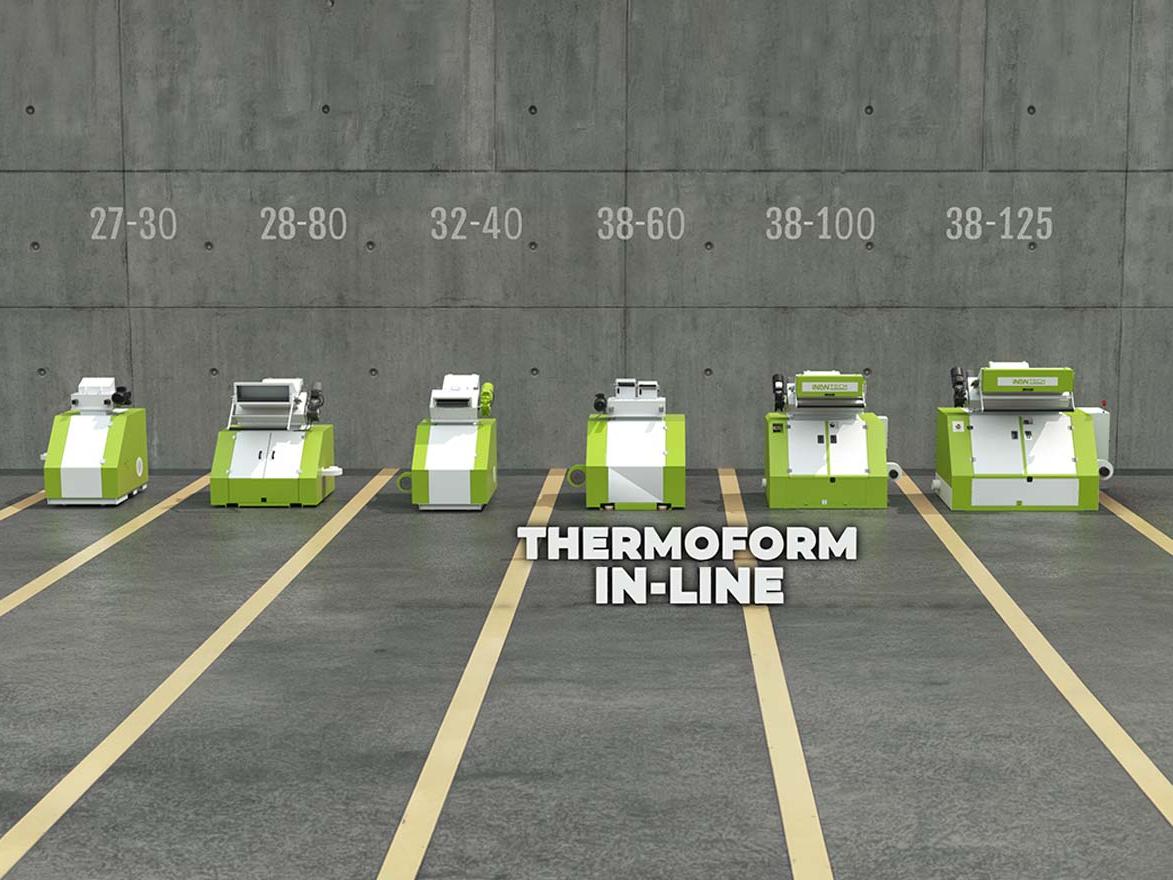
In-line Crushers
Positioned behind the production line; instantly recovers thermoform and side scrap.
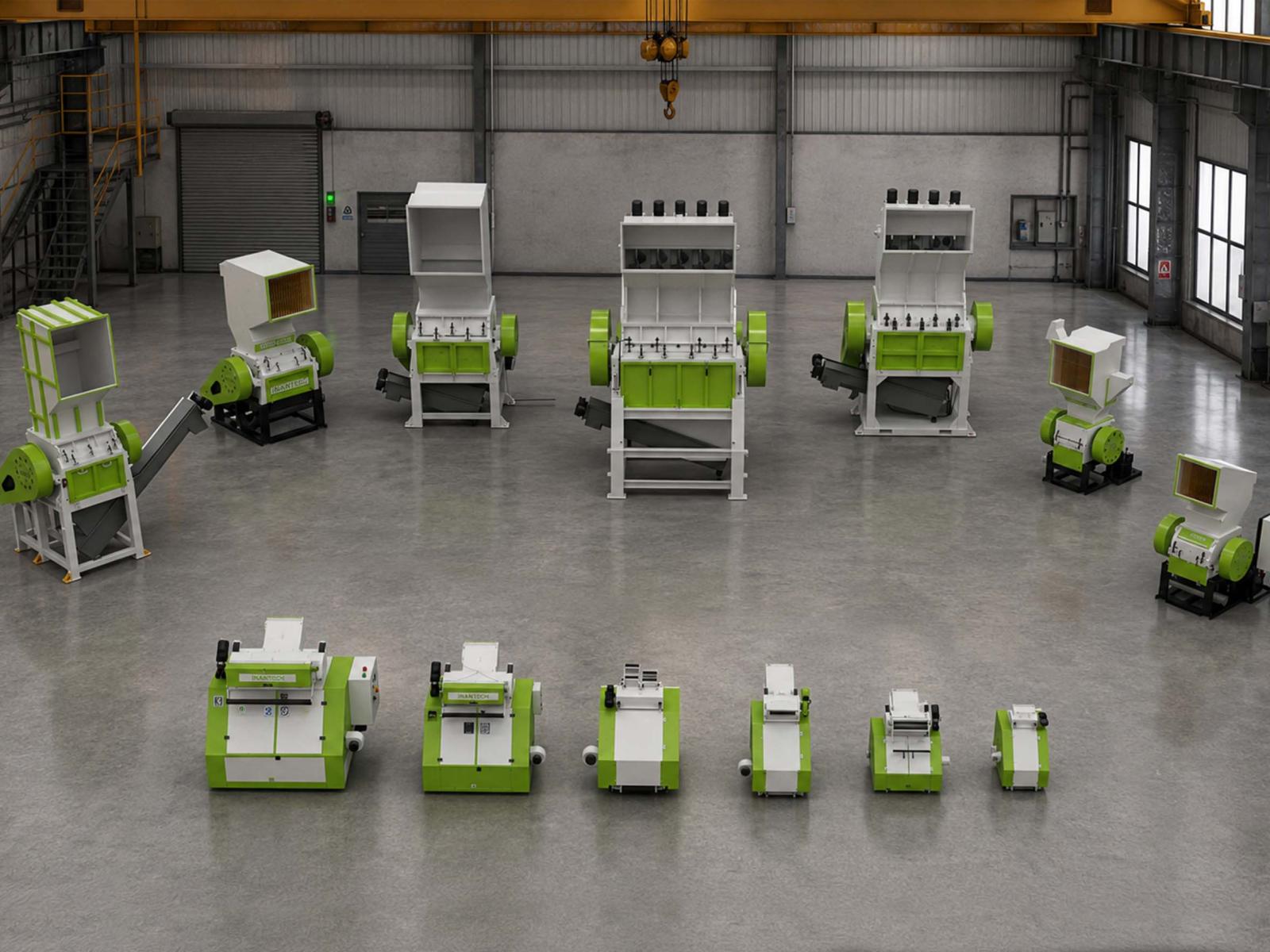
Detail →Industrial crushers that reduce plastic scrap and waste to a homogeneous flake size. A solution for every capacity with in-line, compact and heavy-duty models.
Plastic crushers take the material in through the feed throat. Inside, the material is cut and broken between the moving blades attached to the rotating rotor and the fixed blades in the housing. The broken material passes through the screen beneath the rotor at the desired size and is directed to the outlet. The size of the screen hole determines the size of the output flake: a smaller screen means a finer output.
The right crusher is not the "biggest" machine; it is the machine with the capacity best suited to your needs. The following criteria are decisive in the selection:
Plastic crushers are used across a wide range of materials: PET bottles and preforms, HDPE drums and crates, PP injection parts, LDPE film and nylon, as well as sheet, pipe, profile and production scrap. The type of material, its wall thickness and geometry are the key factors in determining the rotor type, blade arrangement and feed-throat design. The machine configuration is adapted accordingly for different inputs, from thin films to thick and rigid plastics. For this reason, the question "what material will you crush, and in what form?" is the starting point of the right solution.
For facilities that want to instantly recover the scrap generated at the production line's output, in-line crushers are suitable; integrated directly into thermoform, blow-molding, injection and film lines, they work without interrupting the material flow. For standalone and high-volume crushing needs, compact or heavy-duty models stand out. Which layout is appropriate depends on your production flow, your floor space and the way the material is collected. In most recycling facilities the crusher is positioned as part of an integrated line together with the shredder and washing stages.
Cutting performance depends largely on blade sharpness and the rotor–stator (moving–fixed blade) setting. Because blades are wear parts over time, their periodic sharpening and correct torque setting preserve both efficiency and output quality. The screen is the critical part that determines the output flake size; it should be selected in harmony with the subsequent washing and pelletizing stages. A design that provides easy access to the blades and screen shortens maintenance and cleaning times, increasing the line's uptime. İnan Tech blades are hardened with a nitriding process to make them long-lasting; the reversible (two-way) screen design extends the screen's service life. The machines are compatible with a wide range of plastics such as PE, PP, PVC, PET, PS, ABS and PC.
The information on this page is for general guidance; the appropriate model, capacity and configuration are determined according to the project and the material to be processed. For details, you can contact İnan Tech.
Positioned behind the production line; instantly recovers thermoform and side scrap.
Detail →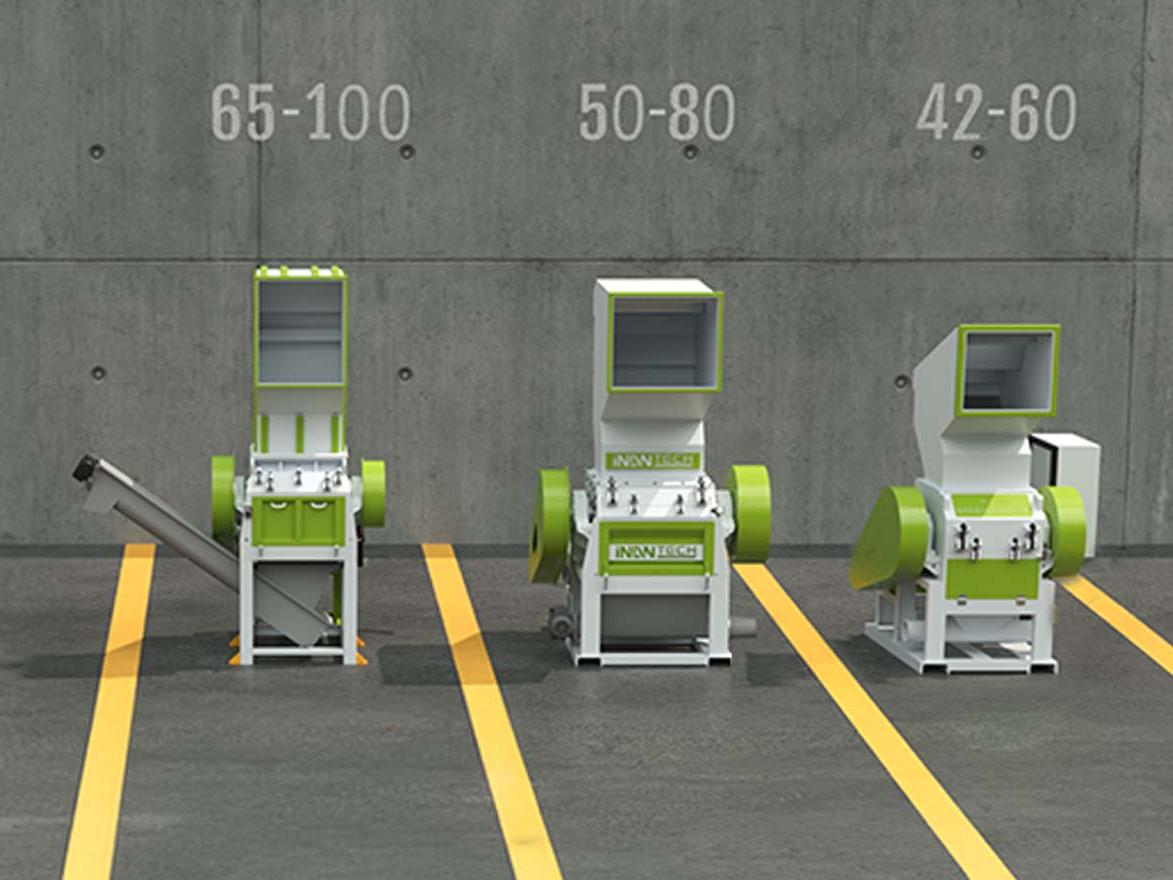
Balanced, space-saving solutions for beside-the-machine or central crushing.
Detail →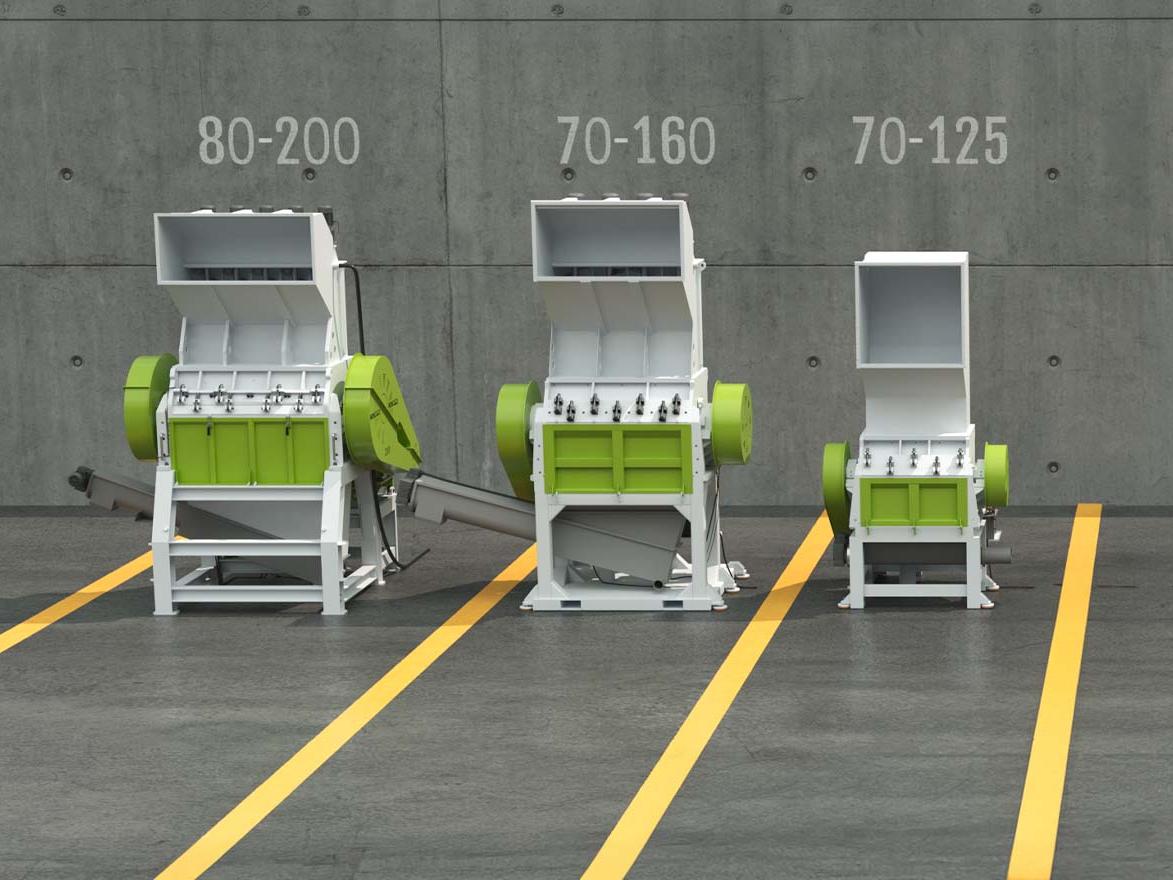
High torque and capacity for dense, thick and continuous material flow.
Detail →
Share your needs; let us determine the most suitable model for you together.