Choosing a plastic pulverizer: material, powder fineness, output and application. A guide to İnan Tech's 300, 500 and 800 models.
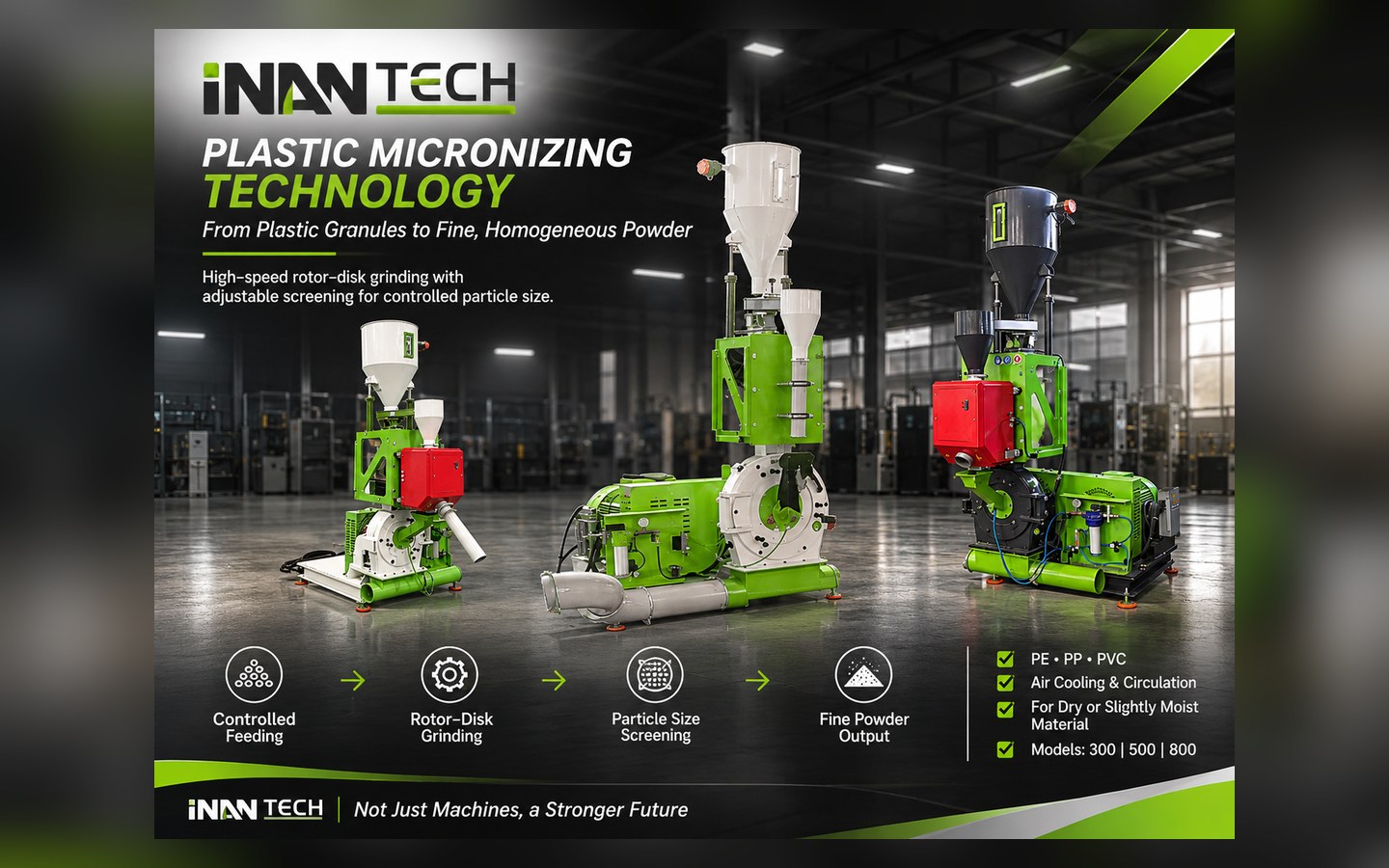
A pulverizer grinds plastic granules or regrind into powder. The material is fed into the grinding chamber in a controlled way, ground between the rotor and the disk, and then screened to the required particle size. The homogeneous powder is used as raw material in processes that work with powder, such as rotational moulding, powder coatings and compounding. Our article on how a pulverizer works explains the principle in more detail.
Choosing a pulverizer is not only about capacity. Material, target fineness and application need to be considered together. The four questions below are the shortest way to the right model.
PE, PP and PVC behave differently during grinding. Some materials become fine more easily, while others are more sensitive to heat. The material directly affects the grinding settings and the quality of the powder. Whether the feed material is dry or slightly moist also matters. Telling us your material and its form (granules, flakes or regrind) at the start lets us prepare the machine for it.
Rotational moulding, powder coatings and compounding each need a different powder fineness. Because the output fineness depends on the material, we define the target particle size for each project. The adjustable screening system helps keep the particle size under control. That is why it is important to share your target fineness and the acceptable range at the start.
Your hourly or daily powder requirement is decisive in choosing the model. Capacity depends on the material and the target fineness, so a single figure would not be accurate. Taking your growth plans into account, not only today's needs, helps you avoid having to replace the machine later.
Will you use the powder in your own production or sell it? Is it for rotational moulding, powder coatings, or masterbatch and compounding? The application determines both the target fineness and how the powder is collected and packed.
The 300 model suits companies with entry-level to medium capacity needs. Companies starting powder production, or those that want to produce their own powder for a specific product, can start with this model.
The 500 model is designed for companies that need medium to high capacity. It is a balanced choice for plants that produce powder regularly and work with more than one material.
The 800 model is the largest in the range and suits production that requires high capacity.
We confirm the right model together with you, based on your material, target fineness and output requirement.
A pulverizer is usually fed from a feeding unit. The ground powder passes through the screening section and can then be collected into bags or big bags. Sharing your plant layout helps us plan the feeding and powder collection together.
To recommend the right model, we need:
Technical information may vary; for precise details, please contact İnan Tech.
Share your material and target fineness, and our team will recommend a suitable model.
