In plastic recycling, the first physical step is size reduction, and the efficiency of the rest of the line is largely decided here. Shredders, crushers (granulators) and pulverizers all reduce material, but they work on different principles and are built for different outputs and scenarios. This guide helps you choose the right equipment for your material and your goal.
Collected plastic waste arrives in many shapes and sizes — bottles, drums, film, lumps, production scrap. Washing, separation and pelletizing can only work efficiently when the material first reaches a consistent, manageable size. Under-sizing wastes energy and stresses downstream machines; over-sizing or inconsistent flake reduces washing efficiency and final granule quality. Choosing the right size-reduction equipment therefore protects the performance of the entire line.
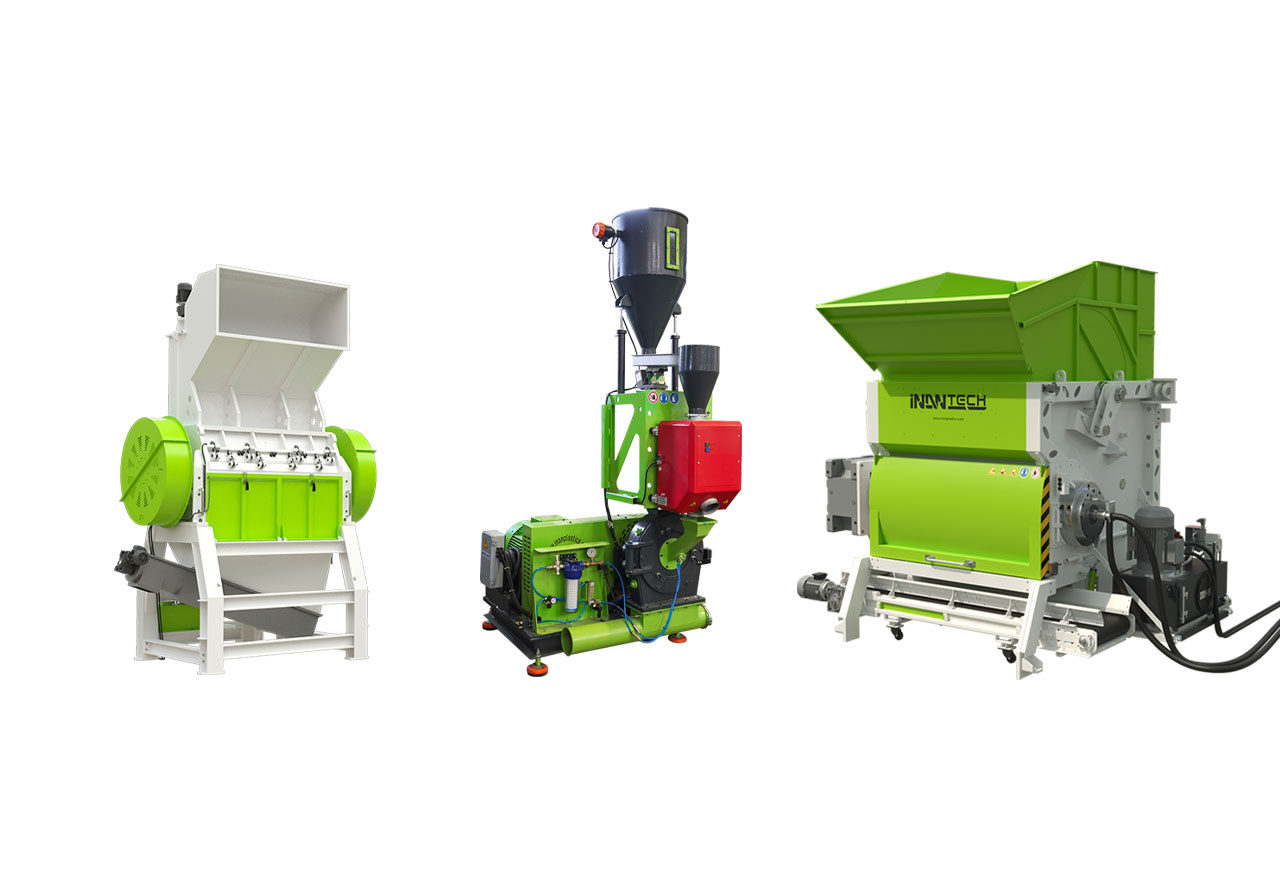
A shredder runs at low speed with high torque, tearing large, thick, bulky or baled material into coarse pieces. It tolerates tough, mixed and contaminated feed and is typically the first machine in a line handling big input. Single-shaft and double-shaft versions suit different feed types.
A crusher (granulator) cuts material between rotating and fixed blades and passes it through a screen, producing clean, uniform flake whose size is set by the screen. It is the workhorse of most recycling lines and is offered in in-line, compact and heavy-duty series. For the differences from a shredder, see crusher vs shredder.
A pulverizer grinds flake or granule into fine powder at micron level, for applications such as powder coating, rotational molding and fillers. It is a specialized step, used only when powder is the target product.
| Feature | Shredder | Crusher / Granulator | Pulverizer |
|---|---|---|---|
| Principle | Low-speed, high-torque tearing | High-speed cutting through a screen | Disc grinding to powder |
| Typical input | Large, thick, baled, mixed | Small-to-medium clean parts | Flake / granule |
| Output | Coarse pieces | Homogeneous flake | Fine powder (micron level) |
| Position in line | First (pre-breaking) | Core size reduction | Final / specialized |
| Typical use | Bulky scrap, lumps, bales | Bottles, parts, in-line scrap | Powder applications |
| Material | Suggested approach |
|---|---|
| PET bottles & preforms | Crusher (granulator); a shredder is added only for very large bales |
| HDPE drums & crates | Shredder for pre-breaking, then crusher for flake |
| LDPE film & bags | Crusher sized for film; often followed by agglomeration before extrusion |
| Thick / bulky lumps | Shredder first; crusher afterwards if uniform flake is needed |
| Powder / filler requirement | Pulverizer after crushing |
This guidance is general; the exact configuration depends on your material and project. See also our size-reduction category and request a tailored recommendation.
In a typical recycling line the chain runs: feeding → shredder (for bulky input) → crusher → washing → drying → optional pelletizing, with a pulverizer only where powder is required. Each machine is sized to work in harmony with the next. For end-to-end design, see our recycling lines.
Share your material and target output; our engineering team will recommend the right size-reduction setup.
