Extrusion is a plastic forming method used to shape rods, profiles, wire, pipe and thick-walled profiles. It is widely used across the construction, electrical, chemical and food industries.
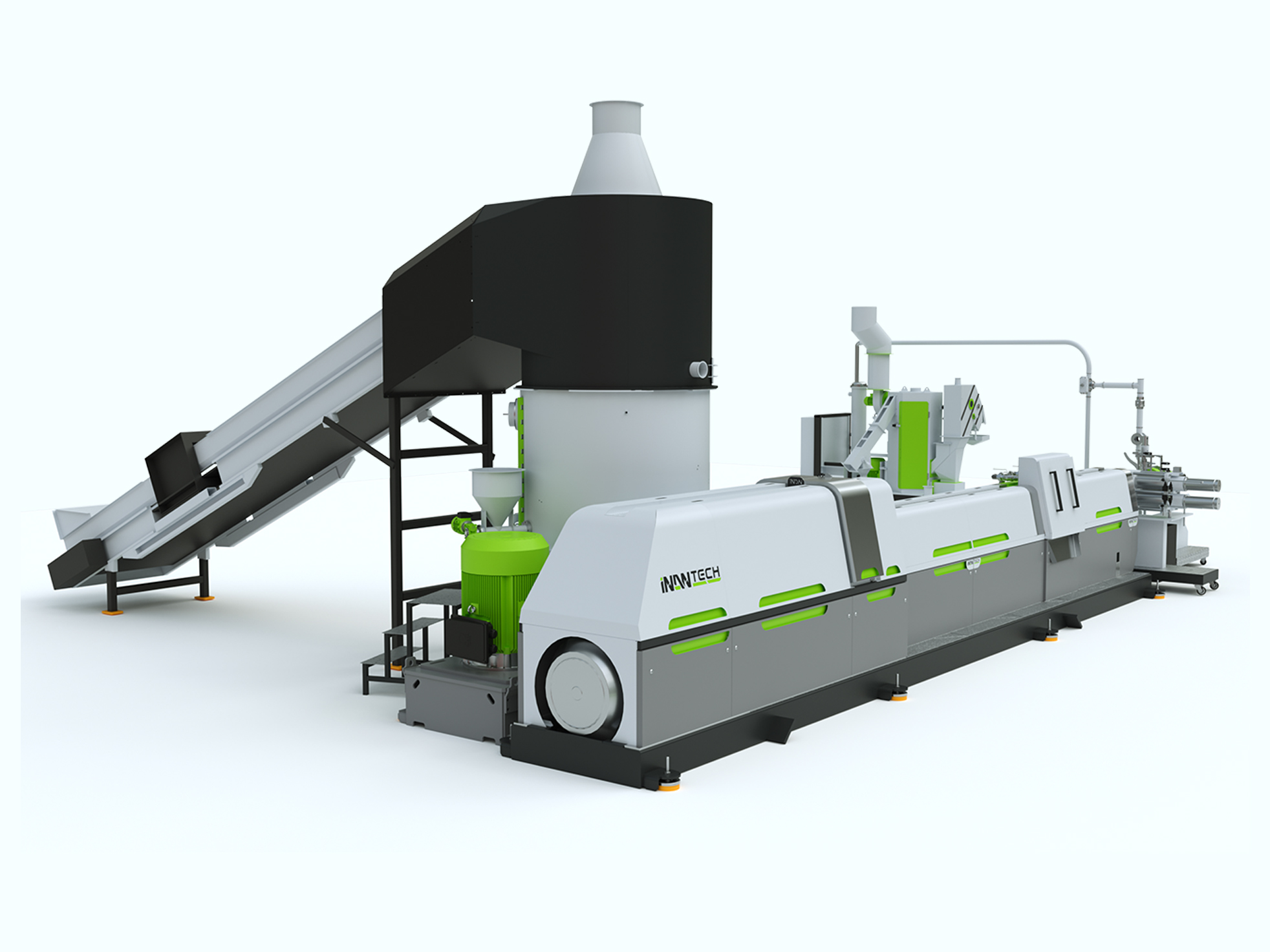
Extrusion machines are similar in structure to injection machines. Plastic granules are melted inside a barrel jacketed with a motor and heaters; the molten plastic passes through a die to take the desired shape and then travels through a water channel to cool. Once cooled and solidified, the material is packaged and stored.
Plastic extrusion screws generally have three zones: feed, melting and metering. In compounding (mixing one or more polymers with additives), twin-screw extruders are used to achieve adequate blending. Twin-screw extruders fall into two groups, co-rotating and counter-rotating: co-rotating screws provide stronger mixing, while counter-rotating screws build up higher pressure.
The main types include blown film extrusion, co-extrusion, flat film extrusion, foam extrusion, profile extrusion, wire and cable coating, and calendering. The most important advantage is that profiles can be produced in any desired length.
Let us determine the right extruder and pelletizing solution for your line together.
