What is rPET (recycled PET), how is it produced and which steps are needed for food-grade rPET? An overview of the PET recycling process.
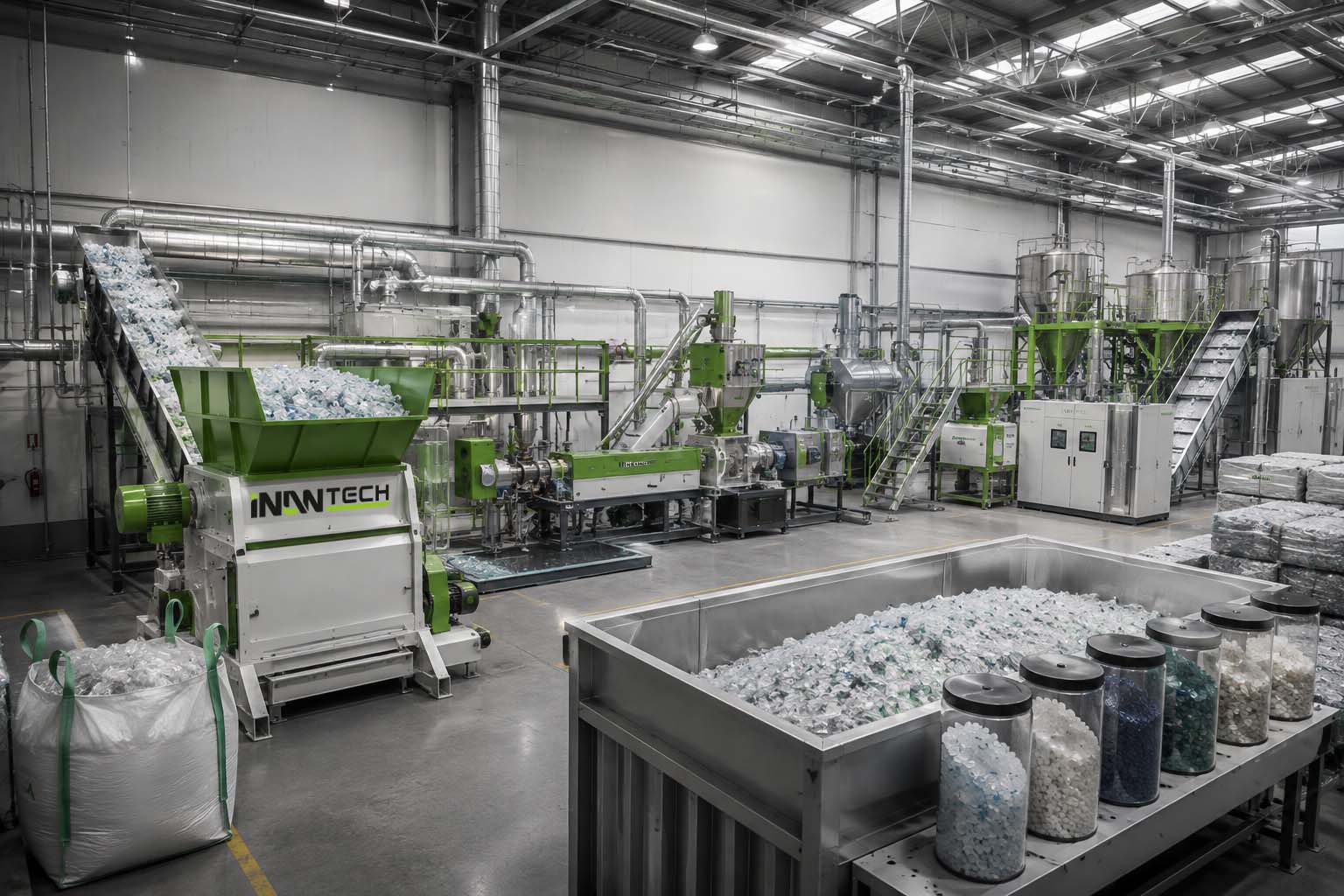
rPET (recycled PET) is a secondary PET raw material obtained by collecting and processing used PET bottles and packaging. It is produced with a markedly lower energy use and carbon footprint than virgin PET; for this reason it is increasingly preferred across many applications such as packaging, textile fiber, strapping and sheet.
Brand owners' recycled-content targets, sustainability regulations and consumer expectations are driving up demand for rPET. Because PET's structure lends itself to recycling, it can be returned to the loop again and again when processed correctly. This creates both environmental and economic value.
The path from waste PET to clean flake or granule consists of complementary stages:
Each of these steps directly affects the cleanliness of the final flake and therefore the quality of the rPET. The process is engineered according to the source of the material and the target application.
For rPET intended to come into contact with food, the cleanliness expectation is even higher. Once clean flake has been obtained, a decontamination and advanced-processing step is generally applied; the aim is to bring any potential residues down to acceptable levels. Suitability for food contact is determined by local legislation and the relevant approval processes; this article is for general information only and does not constitute any guarantee of compliance.
Can rPET be used in the same applications as virgin PET? In many applications it can be used partially or fully; the end use depends on the targeted quality and the relevant regulations.
Can all PET waste become food-grade rPET? No. The source, contamination and the processes applied are decisive; food contact involves additional requirements.
Share your material and your goal; we'll evaluate the right solution for your needs.
