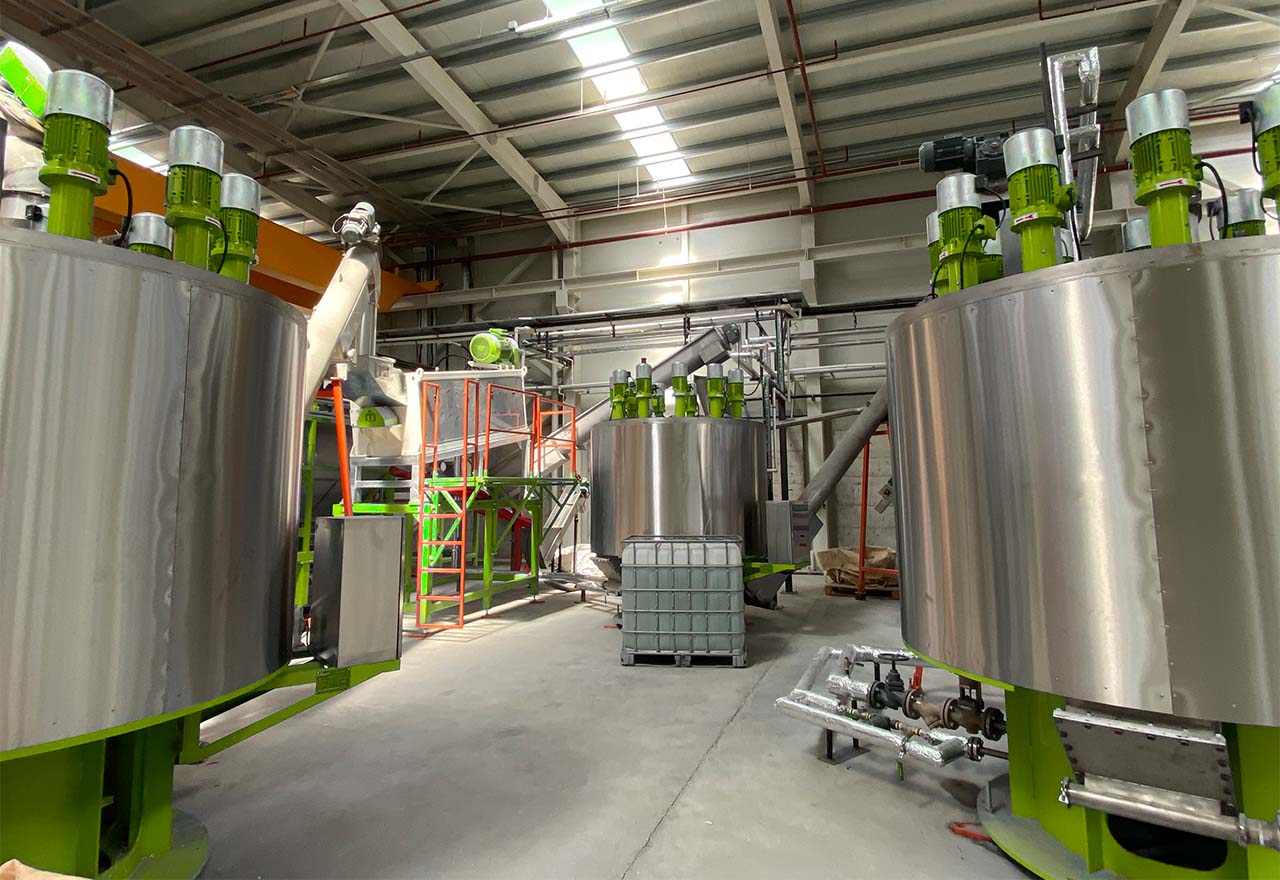
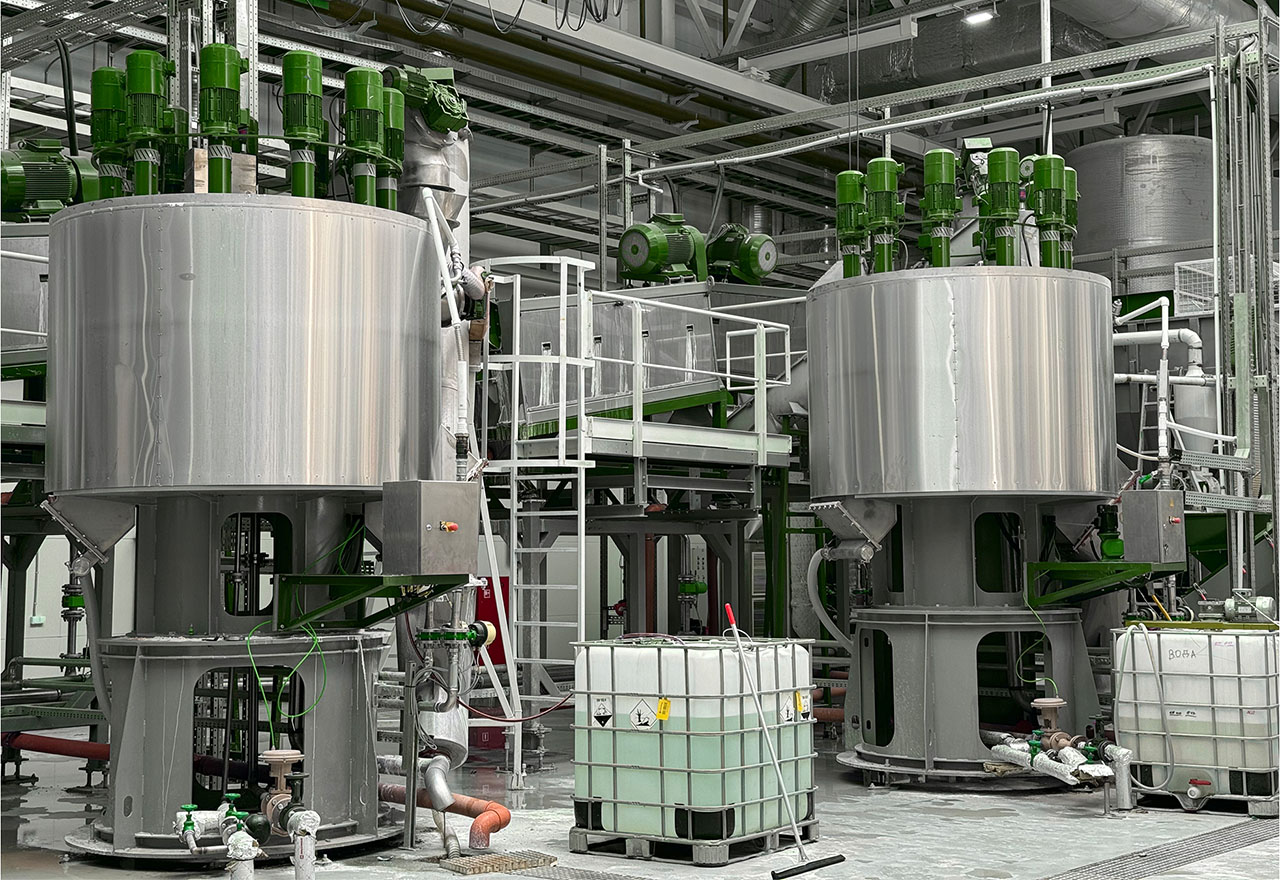
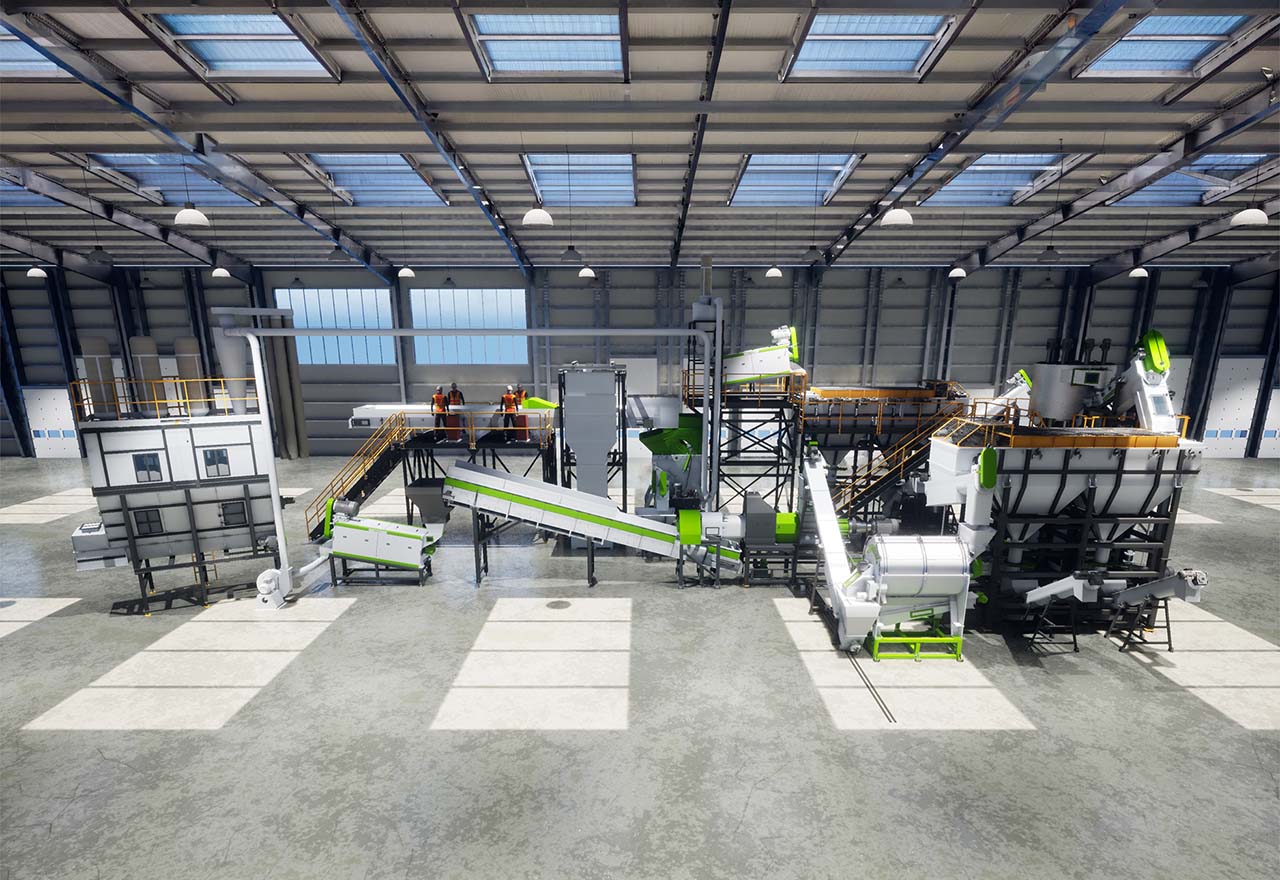
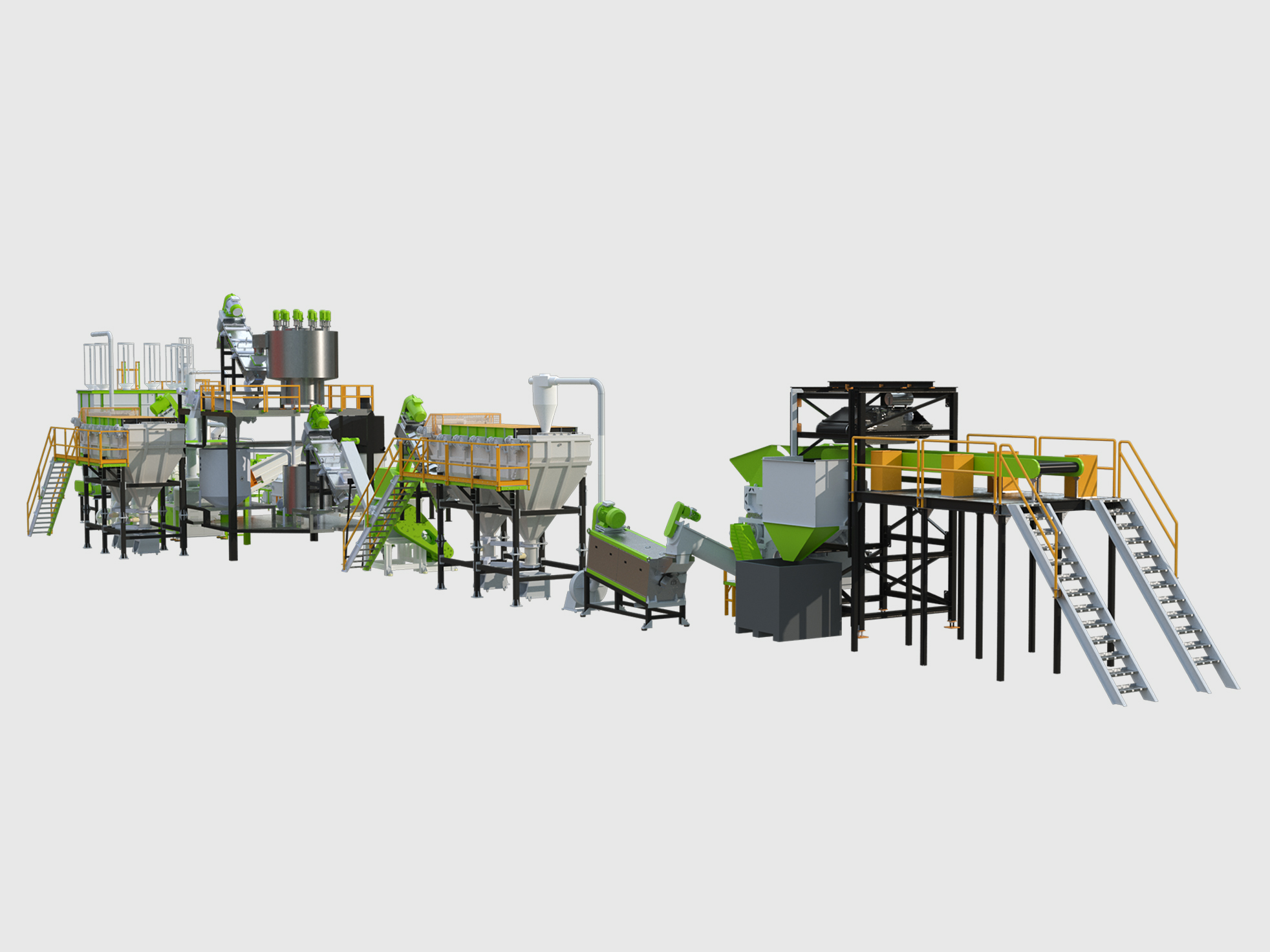
Washing and separation solutions that free dirty, contaminated plastic from oil, labels and soil, turning it into clean, marketable flakes.
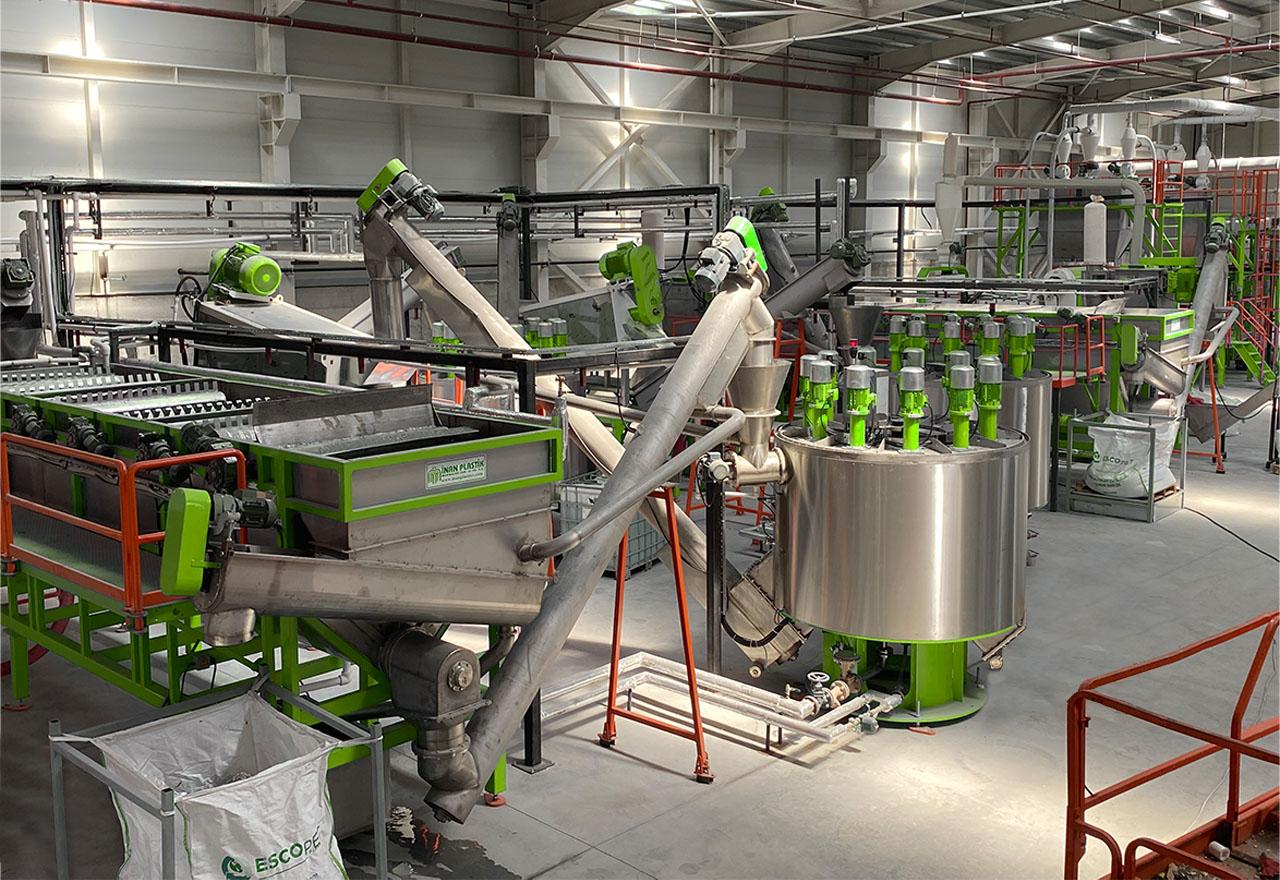
The value of recycled plastic is directly proportional to how clean it is. If oil, label adhesive, soil and organic residues are not sufficiently removed, both the final product quality drops and problems arise in subsequent processes. The washing line is therefore the heart of recycling.
For size reduction prior to washing, you can look at the granulator / crusher and shredder; for a complete solution, see our PET recycling plant.
Because plastic types have different contamination and density profiles, the washing line is engineered according to the material to be processed. In PET bottle lines, the sink-float, hot washing and friction stages come to the fore; in HDPE / PP rigid plastics, intensive washing and label removal play a critical role; while for high-contamination feedstock such as film and LDPE, a more aggressive pre-washing and multiple rinsing are required. The type, sequence and number of stages are determined according to the input quality and the targeted flake purity.
Water and energy account for a significant share of a washing line's operating cost. Closed-loop water use, filtration and water recovery reduce consumption while also lowering the wastewater load. Correct sequencing of the stages (early removal of coarse dirt, followed by hot and mechanical cleaning) both increases water/energy efficiency and raises the final flake quality. The friction and mechanical drying stages remove water at an early stage, easing the load on subsequent steps.
The information on this page is for general guidance only; the line's stages, capacity and configuration are determined according to the project and the material to be processed. For details, you can get in touch with İnan Tech.